
To achieve a level of immunization sufficient to stabilize wild animal populations, approximately one hundred wild boar, seventy roe deer and forty red deer will be vaccinated during the pilot study.
To enable vaccinated animals to be identified later for monitoring or booster vaccination, they will be captured once and fitted with a GPS-equipped ear tag.
Capture
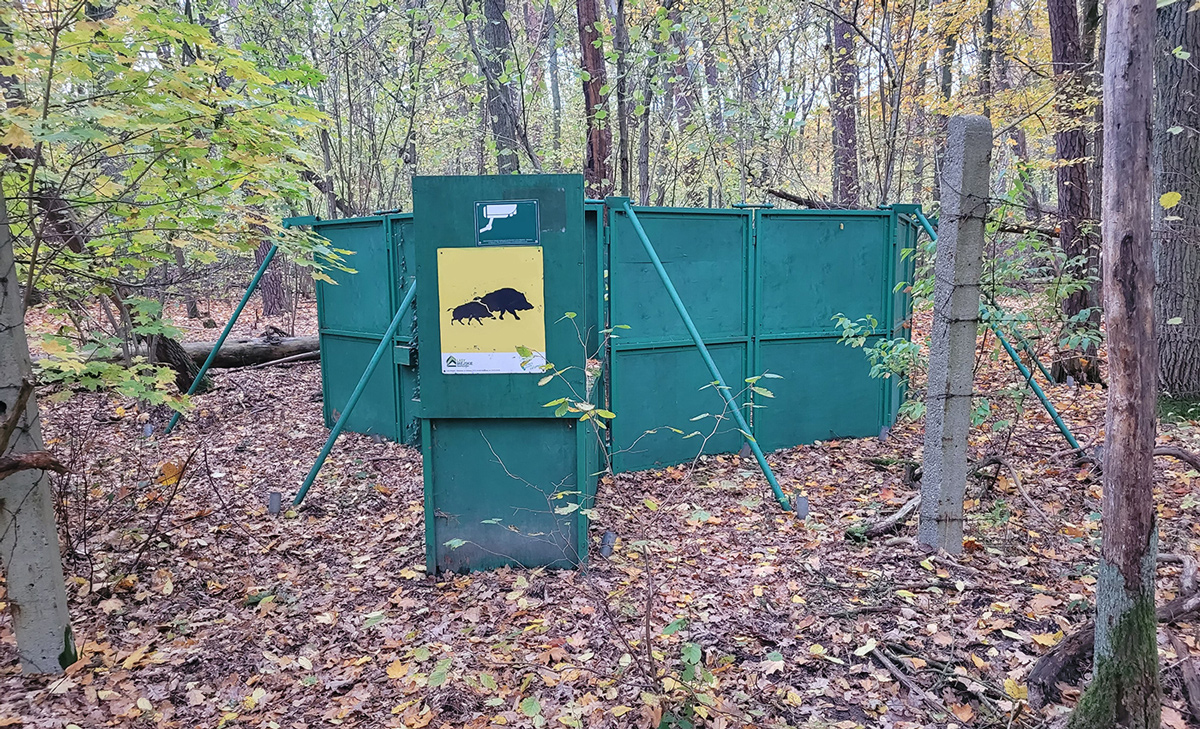
Several capture methods will be used. These are generally carried out either by immobilizing animals with a hypodermic dart or by capturing them in an enclosure where they are attracted with food. All techniques will follow best practices and comply with the recommendations of the federal authorities.
During the study, drones will also be used to compare their effectiveness with that of conventional capture methods. Equipped with thermal sensors, they will be used to locate animals, while algorithms will enable their identification. The drones may also be used to fire dart syringes to anesthetize animals remotely, without direct handling, and to track them until the anesthetic takes effect.
The study will also evaluate these different capture methods and assess their effects on the animals.
Identification
The animals will be identified by fitting them with a GPS-equipped ear tag, allowing them to be monitored for one to two years. This monitoring will make it possible to assess the impact of capture on the animals' mobility and normal movement patterns, as well as to locate fecal samples for progesterone analysis in monitored females. Camera traps will be used to determine whether a female is accompanied by an offspring and to establish her reproductive status.
The ear tags will also be identifiable from a distance through a color assigned to each year of the study.
Immunization
Each animal will receive a single dose of either GonaCon or SpayVac. Small groups of animals will receive two doses to determine whether this improves the duration or effectiveness of immunization.
Interruption of the study
The study will be discontinued if the capture procedures cause adverse effects to the animals that are disproportionate to the expected benefits of immunocontraception, or if the capture success rate is lower than that required to make this method applicable in accordance with the objectives of the study.