
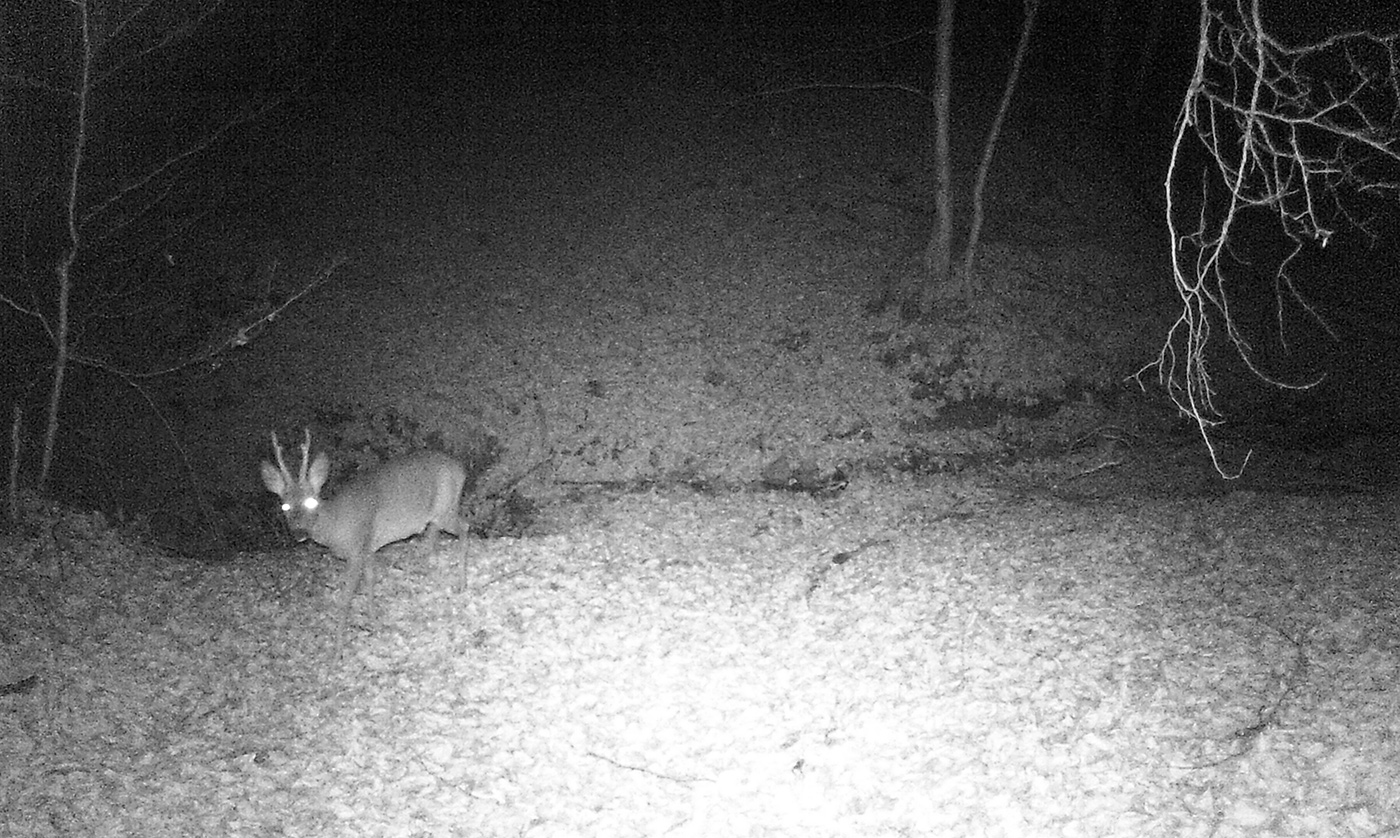
Although hunting was banned in 1974 following a popular referendum, the Canton still culls hundreds of animals every year. These operations, carried out annually by staff of the Cantonal Office for Agriculture and Nature (OCAN), mainly target wild boar and deer (roe deer and red deer).
Wild boar
Between 200 and 450 wild boar (486 during the 2025–2026 period) are culled annually throughout the canton. The culling aims to maintain the population at approximately 170 individuals, as it can double each year due to the reproductive capacity of breeding females.
Roe deer
The roe deer population is estimated at between 250 and 500 animals, distributed among three populations located in Versoix, Jussy and the Mandement region. Only the latter has been subject to annual population control since 2015 because of damage to vineyards. Approximately 10% of the population is culled each year.
Red deer
Red deer culling aims to reduce both the resident population (estimated at approximately 30 to 40 animals in 2023) and the transboundary population (around 120 individuals) established in the forests of Versoix. Thirty-nine red deer were culled during the winter of 2025–2026.
Cost of population control
The time required for a wildlife ranger to cull a single animal is estimated at 4 to 8 hours and, in some cases, between 8 and 15 hours. Based on an average of 6 hours per cull, this would represent a total of 3,300 hours to cull the 550 animals reported for the 2025–2026 period, equivalent to nearly two full-time positions.
According to OCAN, the average annual cost of wildlife population control is approximately CHF 200,000. This estimate was published before the large-scale wild boar culls carried out over the past three years and before the annual red deer culls that began in the winter of 2023.
Objectives of the pilot study
The study aims to evaluate the effectiveness of the GonaCon and SpayVac immunocontraceptive vaccines in stabilizing or reducing wild animal populations, as well as the economic and logistical feasibility of their long-term use as an alternative to culling.
The study will also monitor vaccinated populations and assess the effects of capture, handling and, where necessary, anaesthesia on the animals. Should vaccinated animals be injured, culled or found dead, necropsies will also be performed to identify any physiological effects associated with vaccination.
The data collected and the results of the study will be published in a scientific journal in order to contribute to the scientific literature on these vaccines and their observed effects.
Legal basis
The use of an alternative to culling is based in particular on Article 16, paragraph 1, of the Geneva Wildlife Act (LFaune), which provides that population control by culling may only be carried out after all preventive measures have been exhausted.